
13 Things That Helped Me Survive Loss & Transition
In October, the soft morning light streamed through the trees onto my son Eska's face. I picked up sticks with him, held him, smiled — amazed he was healthy, alive, awake. Inside, my heart was shattering. My husband Enrique was experiencing complications from the surgery to remove his tumor and had been losing weight rapidly, all before we had even started chemotherapy. I was also a few weeks pregnant with our baby daughter, Alma.
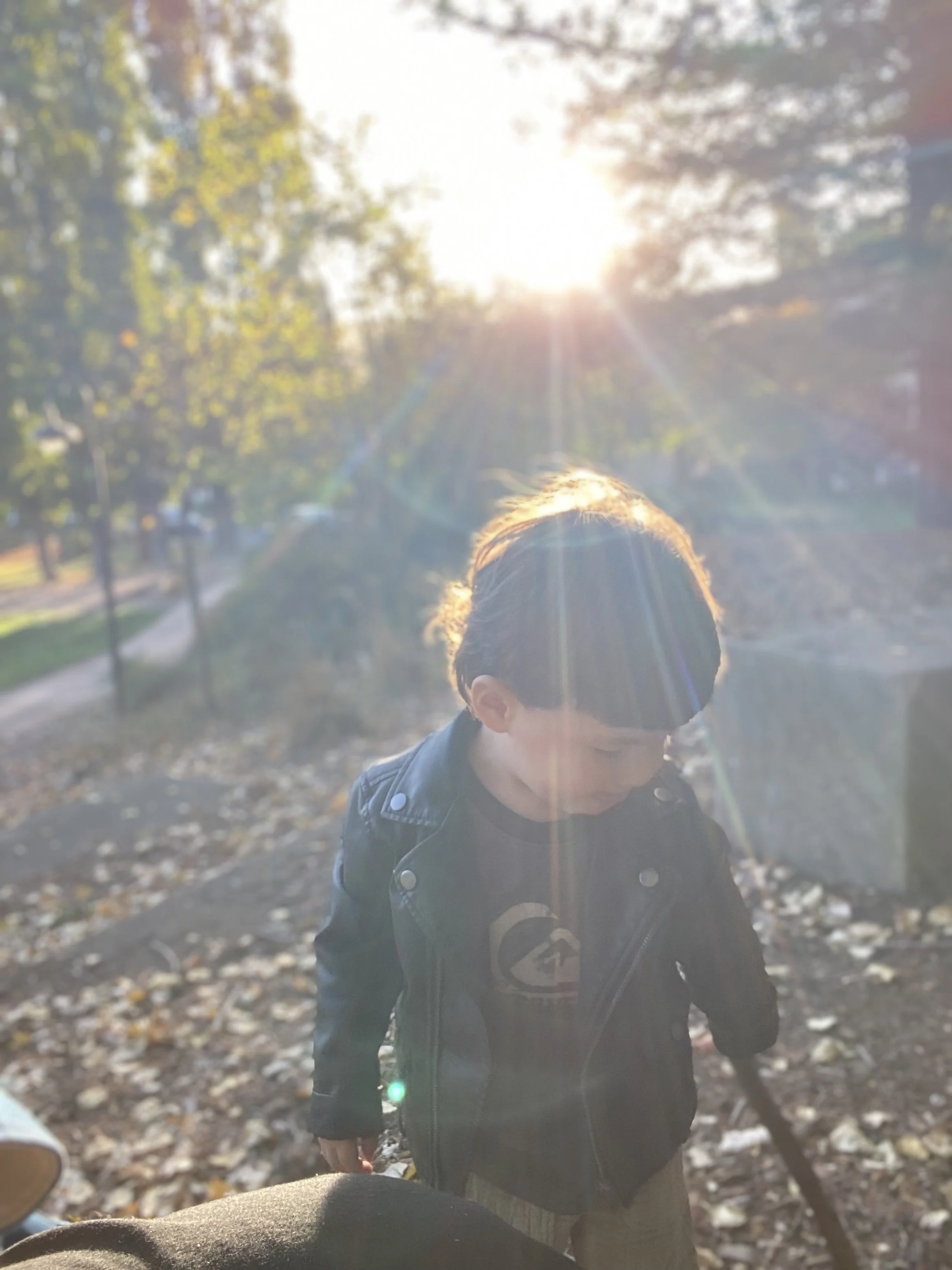
Eska, shy of two years old, picking up sticks and playing with mommy
I took out my phone, photographed my son in the autumn light, and opened a gratitude app I'd just downloaded. What felt good about this moment? What could I be grateful for, even in this moment of crisis? In a strange way, it felt like the only appropriate response (I had my fair share of crying already, mind you). It felt right in that moment to dig very deep and journal something that felt true: I was so grateful for Eska’s health.
Turning to gratitude during a moment of crisis may feel counterintuitive, but I wanted to draw on everything I'd learned about resilience in the last two decades. I needed to pull from every tool in my toolkit to survive, to not let what was happening destroy me completely.
Here's a list of some things that helped me get through the most difficult challenge of my life two years ago when Enrique got very ill and passed away three months later. I know life hands all of us loss in varied forms. Some more severe than others, but not one of us will be exempt from change we didn’t ask for. I share this in case it supports you in whatever transition you're in. ♡
1. Vulnerability. I refused to isolate. I drew my family close and leaned hard on my friends — for walks, calls, food, childcare. I was completely unguarded with my girlfriends, sending voice notes crying my eyes out, telling them I was on my knees. Being witnessed like that helped me process the grief in real time. Drawing people in close was a life-saver.
2. Privacy. I also needed to be alone — to rage, to ugly cry, to wail in a way that might scare someone watching. I needed space to let my heart break into a million pieces and stay there, paralyzed, like an animal.
3. Gratitude. As Enrique was stripped of everything during the hardest bout of his illness, he would jot down a gratitude list in his notes app. I still have it. I also had started one in this gratitude app as mentioned above, and it helped me see the paradox of life— while it could be a shitshow, there was also a lot of beauty happening simultaneously.
4. Touch. Enrique was my main source of touch — hugs, holding hands as we fell asleep, "squishing him like a pancake" in the mornings. When he was physically gone, I turned to our children instead. Five months after he passed away, I had the challenge and enormous blessing of giving birth to our daughter Alma. Breastfeeding and cuddling with her through the newborn phase especially helped me survive the withdrawal of losing him.
5. Widows. My friends and family could support me, but I needed people who'd lost their main person. Meeting widows — especially ones who'd given birth after their partner died — made me feel less like a freak of circumstance. I turned to the Reddit Widower forum (there’s a Reddit group for most things), but also connected with widows through my local parenting community and various hospice groups. Finding people who've lived your specific situation changes everything.
6. EMDR. The medical crisis I navigated while pregnant is hard to put into words — the system failed us in real ways, even as doctors tried their best. Eye Movement Desensitization and Reprocessing (EMDR) is an evidence-based psychotherapy treatment designed to help people heal from trauma. I found an EMDR therapist through word-of-mouth, and using bilateral tappers and visualization, we rewrote some of the most traumatic memories, including one session where I re-imagined saying goodbye to my beloved.
7. Deep breathing. About a year and a half after he passed, I did the Grof® Breathwork Weekend Workshop retreat in Hawaii. Bigger chunks of grief fell away somatically, in a way talking never touched. At home, I used the Sudarshan Kriya (SKY) practice I had learned decades ago through the Art of Living. The body holds what the mind can't release on its own.
8. Nature walks. Enrique introduced me to California's wilderness when we first met. After he died, I walked the redwoods and wept. I sat at the pools where we used to pray together. At the beach where he surfed, I'd breathe the salt air and remember him kneeling before every session. Nature helped me feel that our love had transcended physical form — that it lives in places now.
9. Sephora. Someone once told me you can consciously turn away from grief when it's too much for the day. At eight months pregnant, I went to Sephora almost daily, browsing blushes and eyeshadows for no reason. I really loved these hydrating lip liners from Ilia (hydrating is key, when you’re crying so much). Also binged a lot of reality TV (Love is Blind, anyone?). Sometimes distraction is the medicine.
10. Writing. I told myself, while living it, that I'd never write about this — that I wasn't strong enough. Less than a year after he passed, I sat at my computer and the memories came flooding in anyway. Writing let me see what I couldn't see while living it. It was sense-making, map-making, and liberating on every front.
11. Watercoloring. A creativity mentor suggested watercolor for what writing couldn't reach — the more subconscious material. She once remarked that my paintings were unexpectedly bright and colorful given what I'd been through. We found that worth sitting with.
12. Claude. AI took off around the same time as Enrique's illness, which felt strangely auspicious. I used it as a kind of swiss-army knife — for emotional processing, interpreting my dreams about him, brainstorming his headstone wording, refining his eulogy, as well as the legal and financial complexity of widowhood. Claude stayed up with me for hours at night in a way that wasn’t feasible for my friends and family. I obviously don’t think AI can replace human connection, but it certainly helped me supplement it during a very dark time.
13. The labyrinth. Walking became a kind of language for me — and the labyrinth was its most concentrated form. Two months after Enrique passed, I walked one daily at an InsightLA mindfulness retreat while pregnant. The veil felt thin enough that it became a doorway — a way to walk beside him, share my thoughts, tell him I loved him and missed him, and that we had both tried our best to love each other, even as two imperfect humans. I enjoyed this book about the sacredness of labryinths and what they can offer us during times of transition.
Which of these are you most curious about? Or which have you already turned to in your own hard times? Feel free to comment below here, or on my Instagram. In the upcoming weeks, I'll be deep-diving into a couple of these — with more detail on why, and exactly how, they were so effective.
With so much love,
Majo